Facts checked 2026-11-15.
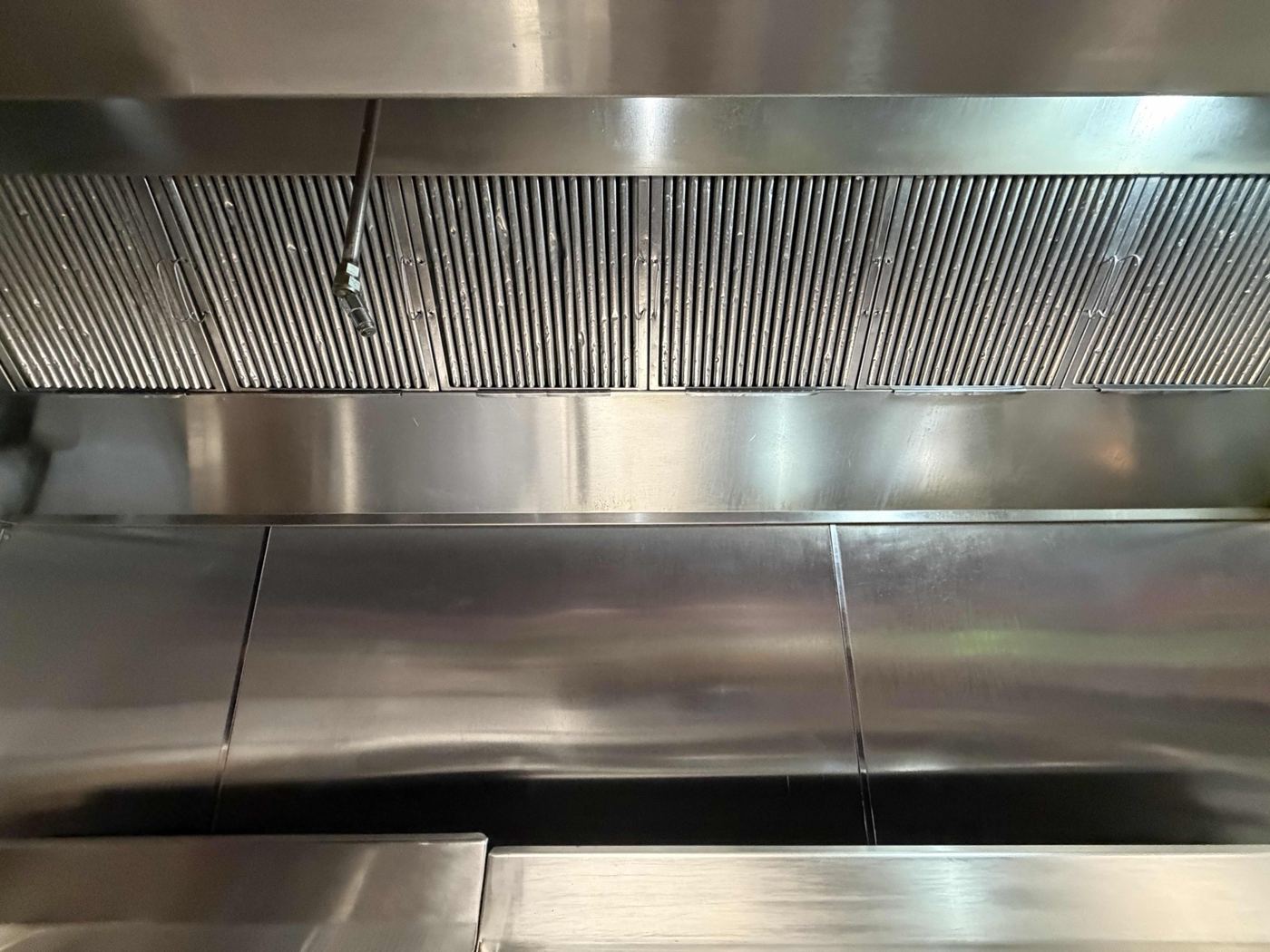
Texas has no state license for cleaning kitchen exhaust. The Texas Department of Insurance lists the fire trades it licenses, and exhaust cleaning is absent from that list. Texas Commercial Kitchen Connect sends your request to cleaning companies near your ZIP code. The company does the cleaning, and your city fire marshal decides what it will accept.
The fire marshal is the authority
NFPA 96 is the national standard for kitchen exhaust. It asks for inspections by a trained, qualified and certified person who is acceptable to the authority having jurisdiction. In a Texas city, that authority is the fire marshal's office.
Industry groups such as IKECA certify exhaust cleaners. The standard does not say which credential counts, so the local office does. Ask it before you hire.
How often the system is inspected
NFPA 96 ties the interval to what the kitchen cooks.
| Cooking | Inspection |
|---|---|
| Solid fuel | Monthly |
| High volume, such as charbroiling or wok cooking | Quarterly |
| Moderate volume | Twice a year |
| Low volume, such as a church or senior center kitchen | Yearly |
That table is quoted from California's 2025 mechanical code, which reprints it. Texas licensing rules adopt the 2021 edition of NFPA 96, and a city may use another edition or add rules.
Get prices for this job. Send one request and pick how many local companies quote it.
Get quotesWhat Houston and Gainesville say
Houston's fire standard says hoods, ducts and fans are cleaned as often as it takes to stop heavy grease from building up. It names no fixed number of months, so the grease decides. The suppression system is a separate duty with its own clock.
Gainesville states that a kitchen with a suppression system gets a third-party inspection and a hood cleaning every 6 months.
Signs a hood needs attention
- grease dripping from the hood or its edges
- a film on the filters that does not come off
- heavy residue on the fan housing
- a hood that smells stale after closing
A health inspector can write up a dripping hood even when the fire marshal has no complaint. The food rules ask for filters that come out easily and a hood that keeps grease off food and utensils.
Cleaning and the suppression system
Hoods and suppression systems are often serviced on different visits. A hood cleaner may or may not work around the system. Ask the company who handles it, and see the suppression page if you need a separate technician.
Questions to put to a cleaner
- Does the fire marshal accept this company or its certification?
- Does it carry the insurance your landlord or insurer asks for?
- Will you get a written record of what was cleaned and what could not be reached?
- Who works around the suppression system?
Ask the fire marshal what record to keep for an inspection.
What to have ready
The address, the type of cooking, how many hours the kitchen runs and when the hood was last cleaned. Cleaners ask for the date of your last inspection tag.
Questions
Does a Texas hood cleaner need a license?
Not from the State Fire Marshal's Office, whose licensing does not cover exhaust cleaning. A city may have its own rule.
How often should a restaurant hood be cleaned in Texas?
NFPA 96 sets inspection from monthly to yearly by cooking type. Cleaning follows what the inspection finds, and some cities, such as Gainesville, name 6 months.
Who decides whether a cleaner is acceptable?
The local fire marshal, as the authority having jurisdiction under NFPA 96.
Sources
- TDI, fire industry licensing
- 28 TAC 34.507, standards adopted for state licensing
- NFPA 96 inspection schedule as printed in the 2025 California Mechanical Code 514.3
- Houston Fire Department LSB Standard 02, section 2.9.1
- Gainesville fire safety inspection
- IKECA frequently asked questions
- FDA Food Code 2017, sections 4-202.18 and 4-204.11